Your ChessKid Fall Recap: New Features, Webinars, and More!
What a season it has been at ChessKid! ✨In the last few months we launched new features for kids, hosted two free webinars for teachers, coaches, and parents, shared the research behind why chess is such a powerful tool for growing minds, and welcomed a brand new way to solve puzzles!
Whether you are a ChessKid player, parent, teacher, or coach, here is your guide to everything you may have missed this quarter. 👀
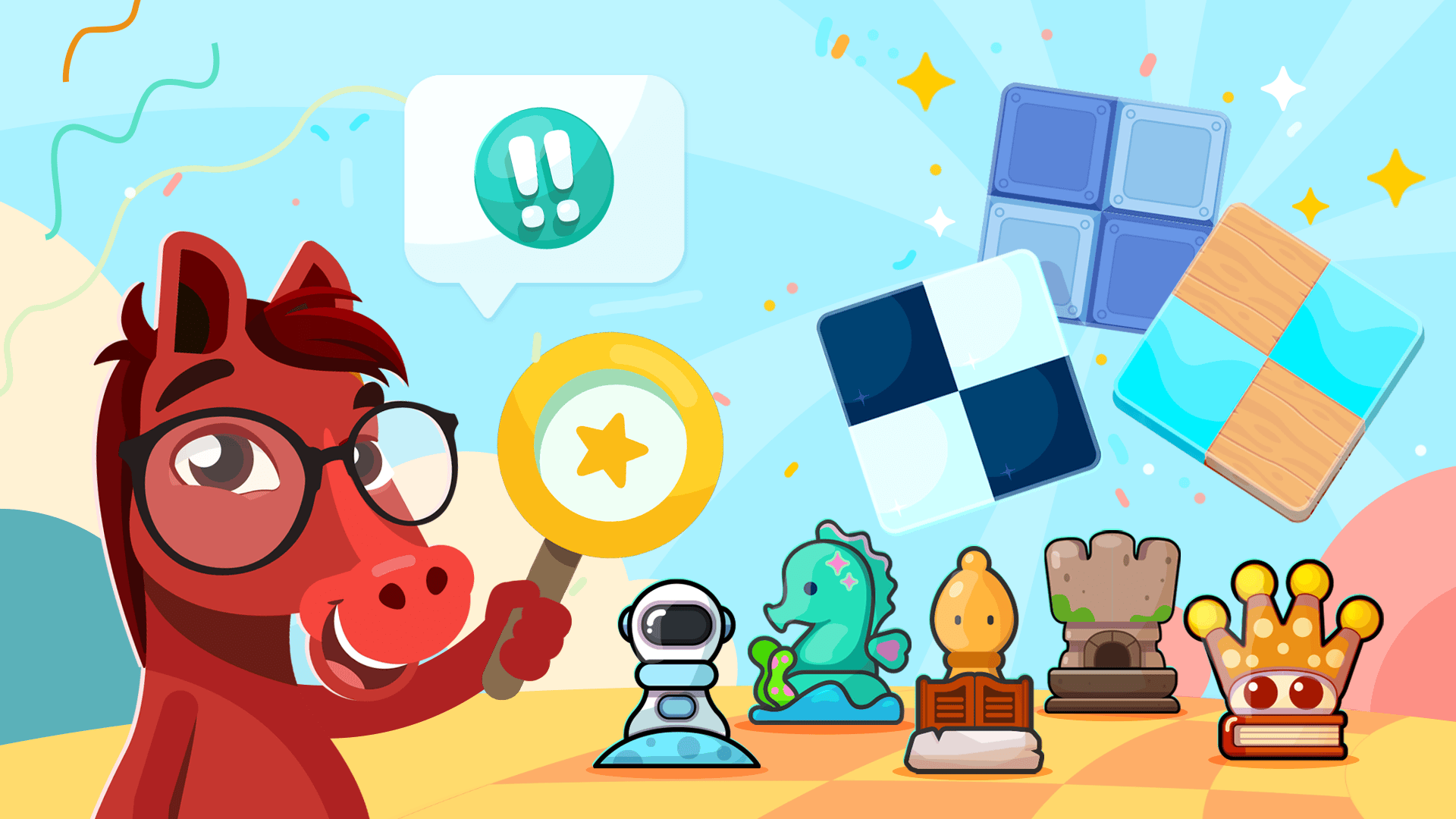
🧩 Puzzle Worlds Are Here on iOS and Android
Puzzles just got a whole lot more fun! Puzzle Worlds is a completely new way for kids to practice tactics. Instead of working through a list, kids pick an avatar outfit, step into a themed world as that character, and make their way through the adventure one puzzle at a time.
- Pick your outfit. Whether your kid loves pirates, space adventures, or medieval castles, there is a world and an outfit to match.
- Every puzzle moves you forward. Kids can see how far they have come and what is waiting ahead, which makes it easy for parents and coaches to track progress too.
- Explore more worlds. Each world has its own theme, look, and challenges, and completing puzzles unlocks more worlds and more ways to personalize.
➡ Read more about Puzzle Worlds
Coming soon to ChessKid.com!
🏠 Big New Features on Web and Android!
Just in time for back to school, ChessKid got some major updates on ChessKid.com and Android. From a brand new Home page for kids to a refreshed way to play Fast Chess, here's what's new:
- Game Review, now on Android and Web. Move-by-move coach feedback, personalized stats, and fun animations. Pick from six coaches: Pawn (the default), Knight, Bishop, Rook, Queen, or King.
- Game Analysis, now open for kids. The unlimited Game Analysis tool on Web is now open to young players. Set up any position, load a game from a FEN or PGN, or save positions to a personal library.
- A new Kids Home page. Avatars take center stage, and a New Game button gets kids into Fast Chess, Slow Chess, or a Bot game in seconds. There's also a Wheel to spin for free rewards.
- Fast Chess on the web. A favorite from iOS and Android is now in the browser, with mystery avatars while you wait for a match with animation, and confetti for every win.
- A fresh Play page. Avatars, current games, game history, leaderboards, and favorite tools, all in one place.
- New boards and pieces. Themed boards and matching piece sets, including the Candy Chessboard and Pieces. Unlock them with Stars and purchase them with Gems.
Want the full tour? ➡ Explore all the new ChessKid features.
🎓 Free Webinar for Teachers and Coaches: Back to School
In August, we hosted a free back-to-school webinar for teachers and coaches. We dug into what is actually changing in classrooms, what the research tells us, and where tools like ChessKid fit into all of it. ♟️
Along the way, we highlighted the tools that help educators save prep time, including the Lesson Planner with 30 ready-to-teach units, a growing library of free classroom resources, and free Enterprise accounts for educators looking to bring chess into their classrooms.
➡ Missed it live? Watch the full recording in our Chess in the Classroom article.
💪 Free Parent Webinar: What 1,064 Parents Told Us About Resilience
For our second free webinar, we turned to parents. ChessKid surveyed 1,064 U.S. parents of kids ages 5 to 15 heading into the 2026 to 2027 school year, and the biggest concern was not what we expected.
- 55% of parents say their own child is less resilient than they were at that age.
- 46% think schools underprioritize handling frustration and failure, the single biggest skill gap parents named, ahead of anything academic.
- 28% say their top concern is whether their child can stay focused in class, more than falling behind academically and test anxiety combined.
On September 29, we walked through the findings in a live workshop called Strategies for Teaching Kids to Lose Well. Parents and educators shared how these resilience and focus gaps show up at home and in the classroom, and everyone left with a one-page Resilience Plan featuring three strategies to start using that same night.
➡ Missed it live? Watch the full recording in our Join the Conversation About Resilience.

💡 The “Did You Know?” Series: Chess and the Research
This season we kicked off our Did You Know? series, a collection of quick, research-backed reads that answer the questions parents and teachers are asking right now. Here's the lineup:
How Much Screen Time for Kids? What the Research Really Says
The largest chess-in-schools study in U.S. history ran on a chess app, and the kids who played came out ahead in creative thinking, problem-solving, and reasoning. We also look at why the American Academy of Pediatrics now asks what kind of screen time kids are getting, not just how much.
Critical Thinking Activities for Kids: Skills AI Can’t Replace
A federally funded study found chess outperformed most enrichment programs for developing critical thinking. Plus, three simple activities to try at home: solve a daily puzzle, predict your opponent’s next move, and think three moves ahead.
How to Improve Focus in Kids: What the Research Says
Passive screen time asks almost nothing of a child’s attention. Chess, even on a screen, asks for sustained focus on every move. A peer-reviewed study of students with ADHD found measurable gains in concentration and listening scores.
Chess in Schools: How It Helps Overwhelmed Teachers
In the Alabama Chess in Schools study, 73% of teachers said chess helped their students academically, and more than 7 in 10 said they enjoyed their jobs more after introducing it.
How to Improve Reading Skills: What the Research Shows
In a two-year Bronx study, kids who joined a chess club gained over five percentile points in reading, while kids who didn’t play gained nothing. Researchers pointed to better concentration, reasoning, and confidence.
👀 What’s Next?
We are not done yet! Our team has plenty brewing for the rest of 2026. Here is a sneak peek:
- 🗺️ New Puzzle Worlds!
- 👗 New avatar outfits to unlock!
- 🎨 More chessboards and pieces to explore!
- 🤖 A whole new Bots experience!
The rest? You will just have to wait and see. Stay tuned! ✨