Checkmate With Two Knights
Why is it important to learn the two knights checkmate, and is it possible to checkmate a lonely king with just two knights? This question is interesting and tricky. The quick answer is: no, you generally cannot force checkmate with just two knights and your king versus a lone king. However, under certain special conditions, you can deliver a checkmate.
Even though it is rarely achievable in regular games, understanding this endgame gives you important skills:
- Recognizing when the material is sufficient to win
- Handling the coordination of two knights and king
- Avoiding traps and believing mythic “you can always win with two knights” scenarios
- Understanding the rules: stalemate, 50‑move rule, forced compared to possible checkmate
Knowing this also helps you avoid pitfalls: you might think you have a winning material advantage when you really don’t.
Here is what you will learn in this article:
- How To Deliver A Checkmate With Two Knights
- How To Defend Against A Two Knights Checkmate
- Wrapping Up
- Checkmate With Two Knights Video
How To Deliver A Checkmate With Two Knights
Before diving into the technique, it's important to remember that this endgame is more about understanding ideas than memorizing exact moves. Even strong players rarely get this position, but knowing how it works will sharpen your coordination and defensive awareness. Think of it as a fun chess puzzle that trains your brain for more common endgames!
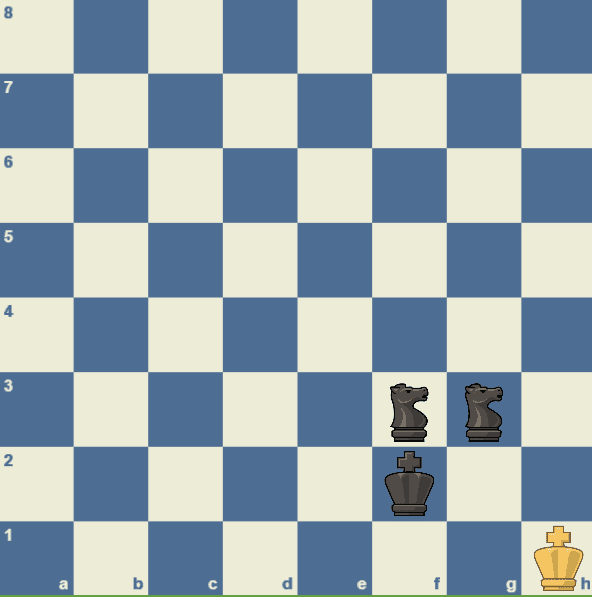
Mission: Impossible.
Understanding The Limitation
With two knights and your king versus a lone king, you cannot force checkmate if your opponent defends correctly. The best your opponent can do is hold a draw.
The black king is confident that checkmate is not possible if they defend well."
The Special Case: Two Knights And An Enemy Pawn
There is a scenario where checkmate is possible: when your opponent has a pawn (or extra material) that prevents stalemate and gives extra move options. In those rare cases, you can force the checkmate. This was studied under the “Alexei Troitsky Line” in two‐knights endgame theory.
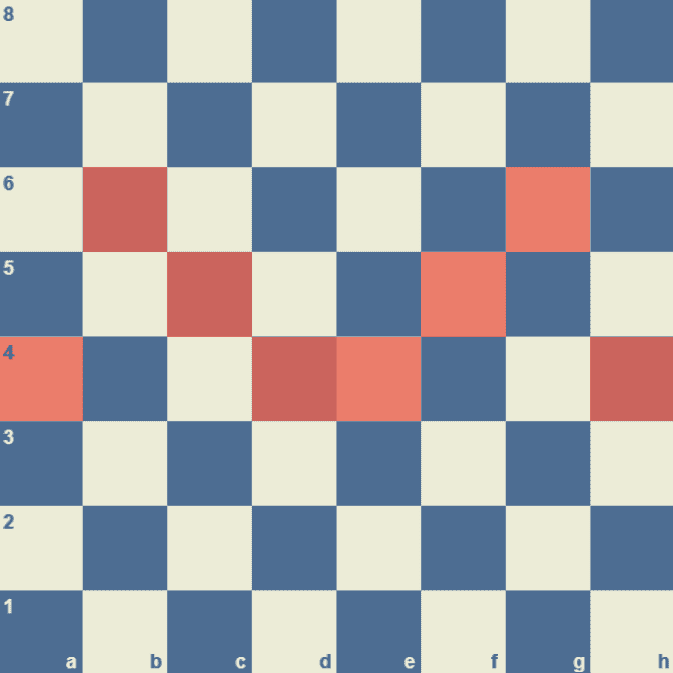
The Troitsky Line is like an invisible fence on the chessboard that tells your two brave knights where the enemy pawn has to stand so they can team up and trap the king for a checkmate!
This checkmate is super tricky! First, one knight has to stand in the pawn’s way. Then your king and the other knight chase the enemy king toward a corner. When the kings and knights are all squeezed together near the edge, your blocking knight joins the action. Together, you guide the enemy king into a tiny corner and, when their pawn steps forward, you hop in with a final knight move for checkmate!
In practice, you block or restrict the pawn, bring the king and knights, push the enemy king toward the edge, and use the pawn being there (or able to move) to avoid a stalemate.
Key Steps And Planning
While this is advanced, here are the generic steps to practice:
- Use your king and knights to push the enemy king toward the edge of the board.
- Keep your knights coordinated; one may block the pawn or key escape squares, the other helps herd the king.
- When the pawn or extra material gives move options for the defender, you can deliver the checkmate in the corner or near the edge before the 50‑move rule applies.
- Avoid stalemate. Always ensure the defending side has at least one legal move (thanks to that pawn).
- Timing matters: you must often do it in fewer than 50 moves after the material is reduced.
How To Defend Against A Two Knights Checkmate
If you are the one playing with only your king (versus two knights) or if you have the pawn and must defend:
- Stay toward the center rather than the edge if you are alone, to avoid being pushed.
- If you have the pawn and the opponent tries this special two knights method, delay the king’s walk toward the corner, keep your pawn active, and use the pawn to give yourself a “move” so you aren’t stalemated.
- Knowing that two knights alone cannot force mate gives you confidence: you may aim for a draw by careful play.
Wrapping Up
The two knights checkmate is rare and tricky. In most games, you will not be able to force a win with two knights alone. However, when the special condition (extra pawn/material) is present, the two knights can deliver the finishing blow. Knowing this adds depth to your endgame knowledge and helps avoid miscalculating your winning chances.
Key reminders:
- Two knights and king vs. king alone = generally draw.
- Two knights and king vs. king and pawn/material = maybe win.
- Avoid stalemate.
- Be aware of the 50‑move rule.
- Practice the route and recognize when you are in the special case.
Checkmate With Two Knights Video
Watch how to do this tricky endgame in action! You'll learn helpful tips for remembering key ideas and avoiding common mistakes.