Legal's Mate
Legal's Mate (also known as Legal's Trap) is one of the most famous chess opening traps. It happens when a player seemingly sacrifices their queen, but instead wins the game with a beautiful checkmate using only their two knights and a bishop.
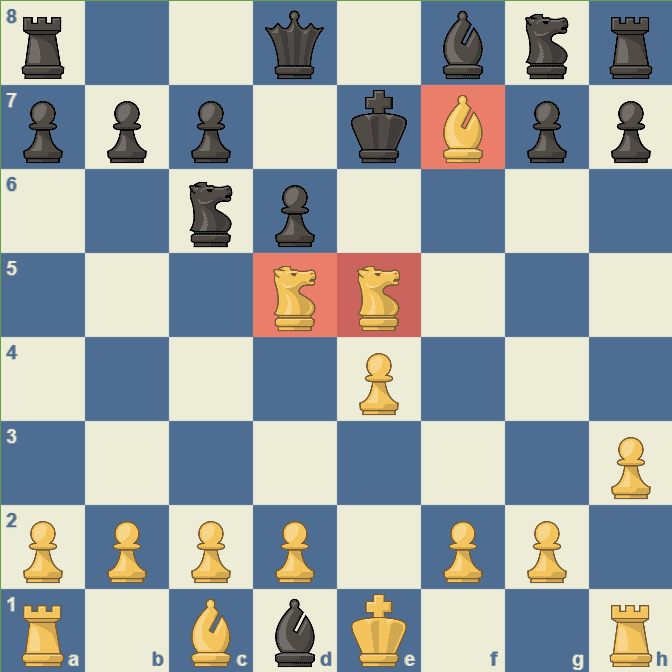
As FunMasterMike likes to say, sometimes your queen becomes the bravest piece on the board by making the ultimate sacrifice. In this article, we'll learn what Legal's Mate is, how the trap works, why it has fooled players for more than 250 years, and how you can avoid falling for it.
Here is what you will learn in the article:
- What Is Legal's Mate?
- How The Trap Works
- The Original Game (Legal vs. Saint Brie, 1750)
- Examples Of Legal's Mate
- How To Defend Against Legal's Mate
- Test Your Skills On ChessKid
- Wrapping Up
- Legal's Mate Video
What Is Legal's Mate?
Legal's Mate is a classic queen-sacrifice checkmate that typically appears in the opening. One player deliberately offers their queen because they know their opponent cannot safely take it. Instead, the queen sacrifice allows a knight and bishop to work together and deliver a surprising checkmate.
Although it looks like a magic trick, Legal's Mate is based on careful calculation and piece coordination.
How The Trap Works
Legal's Mate is built around one important idea: your opponent believes one of your pieces is pinned when it actually isn't. We could call it The Fake Pin or The Pin That Isn't Real:
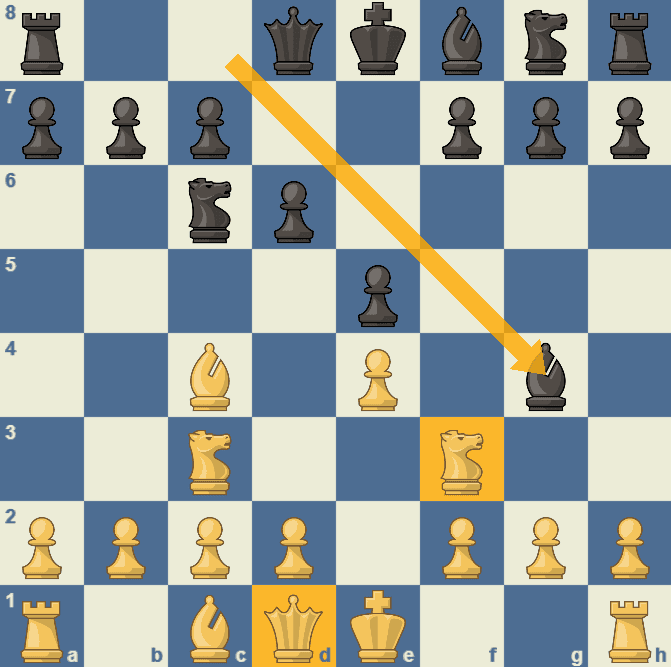
The Fake Pin or The Pin That Isn't Real
The Pin That Isn't Real
The trap begins when Black thinks White's knight cannot move because it appears to be pinned to the queen.
Let’s take a look at the following position:
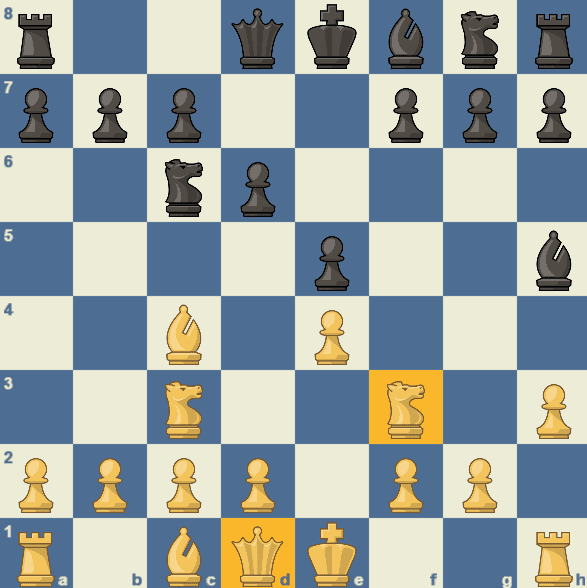
In reality, the queen is not important anymore. The knight can capture the e5-pawn. White has already spotted a checkmate and is happy to sacrifice the queen.
This "fake pin" tricks many beginners into believing they have won a queen.
The Queen Sacrifice
The most surprising moment comes when White ignores the attack on the queen.
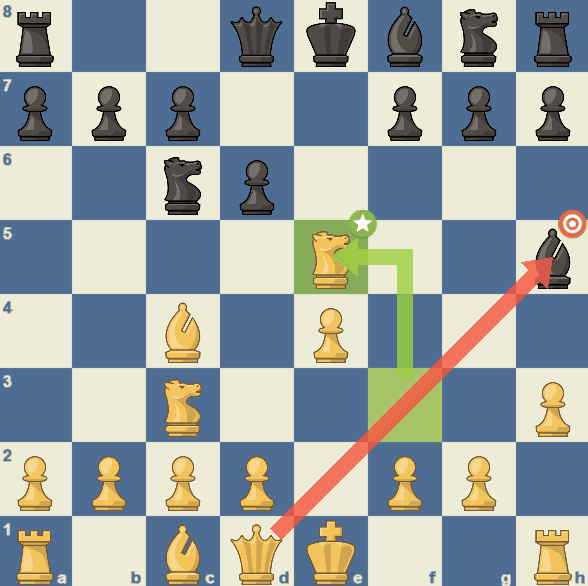
Instead of protecting the queen, White allows Black to capture it.
Why?
Because winning the queen isn't winning the game.
Sometimes the strongest move is not saving your most valuable piece, but using it to distract your opponent while the rest of your army prepares checkmate.
Delivering Checkmate
After Black captures the queen, White's bishop jumps forward with check.
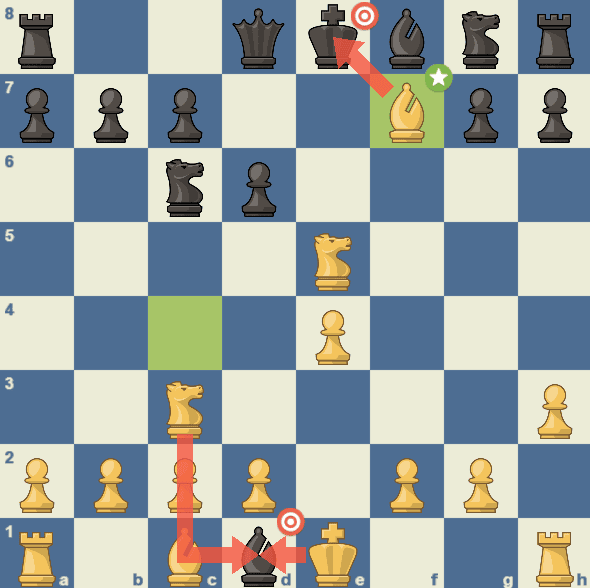
The knight supports the bishop, the king loses its escape squares, and checkmate quickly follows.
It's a beautiful example of piece coordination. Even without the queen, White's minor pieces work together perfectly to finish the attack. White has no interest in capturing the bishop with the king or with the knight. That would be a huge mistake.
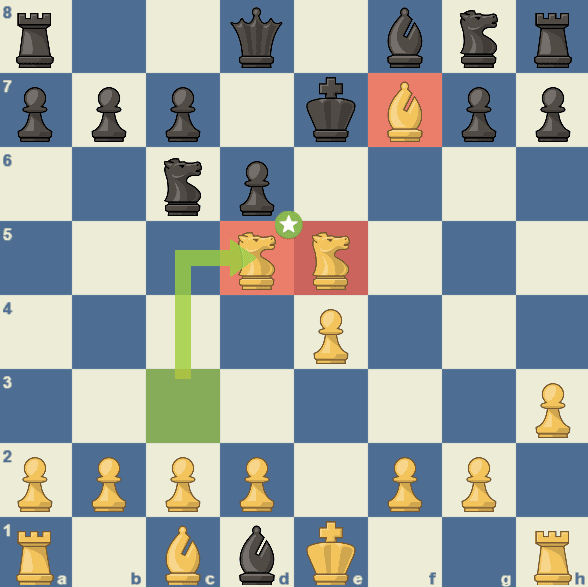
Checkmate: a wonderful collaboration between White's minor pieces!
Here's the checkmate in action:
This is why Legal's Mate has remained one of the most famous tactical patterns in chess history.
The Original Game (Legal vs. Saint Brie, 1750)
Legal's Mate is named after the French chess master Sire de Legal, who played this remarkable combination against Saint Brie around 1750.
According to the famous story, Saint Brie believed he had won Legal's queen. Instead, he was checkmated just two moves later. Although historians have debated the exact details of the game, the combination became legendary and is still taught to chess players worldwide.
Sire de Legal vs. Saint Brie: The Trap That Made History
More than 250 years later, Legal's Mate remains one of the most famous opening traps ever played.
Examples of Legal's Mate
But wait... the story isn't over! Legal's Mate has a few clever plot twists. Even if your opponent dodges checkmate, you can often use the same tactical idea to win a bunch of material instead. Let's take a look!
One more thing! Don't get so excited about Legal's Mate that you start sacrificing your queen every chance you get. If you capture on e5 too early, you might be the one walking into a trap. In chess, patience is a superpower!
How to Defend Against Legal's Mate
Fortunately, Legal's Mate only works if Black falls into the trap. Here are a few simple ways to avoid it.
- Don't Grab the Queen Too Quickly
Winning a queen is exciting, but always ask yourself: "What happens after I take it?" Many opening traps rely on greedy captures.
- Watch Your King's Safety
Before accepting any sacrifice, look for checks and attacking ideas. If your opponent has active pieces aimed toward your king, there may be a hidden tactical trick.
- Complete Your Development Correctly
Legal's Mate is much less dangerous if your pieces are developed and your king is well protected. Good opening habits often prevent tactical traps before they even appear.
Test Your Skills on ChessKid
Think you've mastered Legal's Mate?
Try solving Legal's Mate puzzles on ChessKid and see if you can spot the winning queen sacrifice before your opponent does.
You can also practice related tactics like:
- Pin tactics
- Queen sacrifice tactics
The more patterns you recognize, the stronger you'll become.
Wrapping Up
Legal's Mate is one of the most beautiful opening traps in chess. It teaches an important lesson: winning isn't always about collecting the most pieces. Sometimes a well-planned sacrifice is the fastest path to checkmate.
Remember these key ideas:
- Legal's Mate is a famous queen sacrifice checkmate.
- It works because the knight only appears to be pinned.
- The knight and bishop work together to deliver checkmate.
- Always calculate before capturing your opponent's queen.
Once you know this classic trap, you'll be ready to surprise your opponents—and avoid falling for it yourself.
Legal's Mate Video
Want to see this famous queen sacrifice in action? Watch the Legal's Mate video and follow along move by move with FunMasterMike.