How One Dallas ISD Educator Built Confidence with ChessKid
Strong chess programs aren’t always built by chess experts. Many begin with classroom teachers looking for a new way to engage their students. With the right tools, introducing chess can be simple and manageable. One Dallas ISD educator’s experience shows how ChessKid helps make chess accessible in everyday school settings.
Partner: Dallas Independent School District (Dallas, Texas, USA)
Focus: Teacher-led chess growth powered by ChessKid
Impact: Increased student engagement, leadership development, and tournament success
Case Study at a Glance 📌
Partner: Dallas ISD educator, Yolanda Peña
Region: Texas, USA
Partner Type: Elementary educator leading afterschool chess clubs
The Challenge 🎯
- Limited chess experience as a teacher
- Managing groups of students at different chess skill levels
- Need for structured lessons without heavy prep time
- Supporting student engagement beyond club meetings
The ChessKid Approach 🧭
- Structured Lesson Planner and instructional videos
- Guided puzzles and safe online play
- Tools for tracking student progress
- Flexible resources for both beginners and advanced players
The Impact 📈
- Increased student participation in chess activities
- Improved tournament performance among ChessKid users
- Growth in student leadership through peer mentoring
- Stronger family and community engagement
Background ✨
When Yolanda Peña first started an afterschool club at her elementary school, chess wasn’t part of the plan. She was a classroom teacher looking for ways to give students something beyond screens and wanted to create a space for connection, strategy, and fun. A board game enthusiast herself, Yolanda started a general board game club, but it quickly evolved when she discovered that students could compete in district chess tournaments.
I knew very little about chess,” she explained. “I learned right along with the kids.”
She was soon running chess clubs at two schools, balancing beginner players with advanced students, all while learning the game herself.
Like many educators, Yolanda faced the same barrier new programs often encounter:
- Limited personal chess experience
- Students at different skill levels
- Short afterschool club time windows
- Need for structured lessons without heavy preparation
 Yolanda, now retired from Dallas ISD, shares her chess experiences.
The Solution: Learning and Teaching with ChessKid 🧭
Yolanda was introduced to ChessKid through the district’s Student Activities department, which oversees the district’s chess program. The platform quickly became both her teaching tool and her learning tool.
Instead of designing lessons from scratch, she used:
- ChessKid’s lesson planner and short instructional videos
- Worksheets from ChessKid's curriculum aligned to each concept
- Puzzles and online games for practice
- Reports that helped track student progress
The lesson planners are great…the videos are fantastic, and you can go back if you miss something.”
ChessKid allowed her to differentiate instruction:
- Beginners followed guided lessons
- Advanced players practiced puzzles and played online games
- Students continued learning outside of club meetings by logging into ChessKid at home
That was the beauty of ChessKid — the kids could practice at home too.”
Implementation Highlights
- Weekly chess club meetings supported by ChessKid lesson videos
- Rotating stations combining online play and over-the-board practice
- Peer mentoring roles for advanced students
- Computer lab sessions for structured learning
- Puzzles used to reinforce key concepts
Students quickly began taking ownership of their learning. Older players helped newer students understand tactics and rules, building leadership skills and confidence.
They felt powerful…we gave them a name tag...teacher’s assistant.”
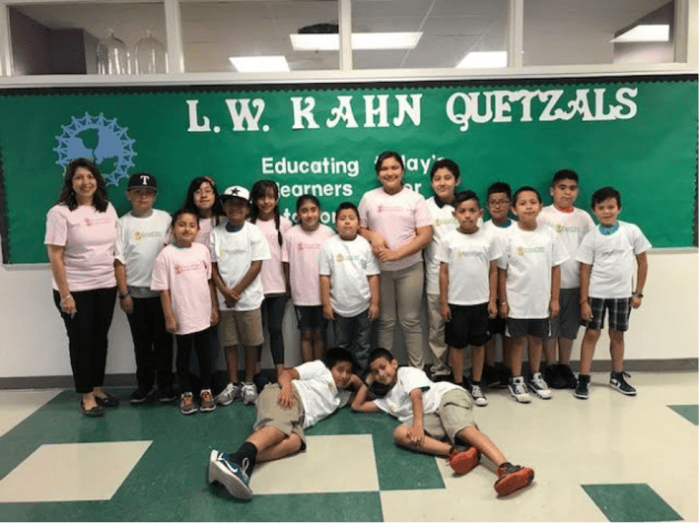 Yolanda with her Kahn Elementary chess club.
Results and Impact 📈
Quantitative Impact
- Increased participation in district tournaments
- Consistent weekly engagement through ChessKid practice
- Students using the platform at home between meetings
- Improved performance among students who practiced regularly
Yes, students who practiced on ChessKid did way better in tournaments.”
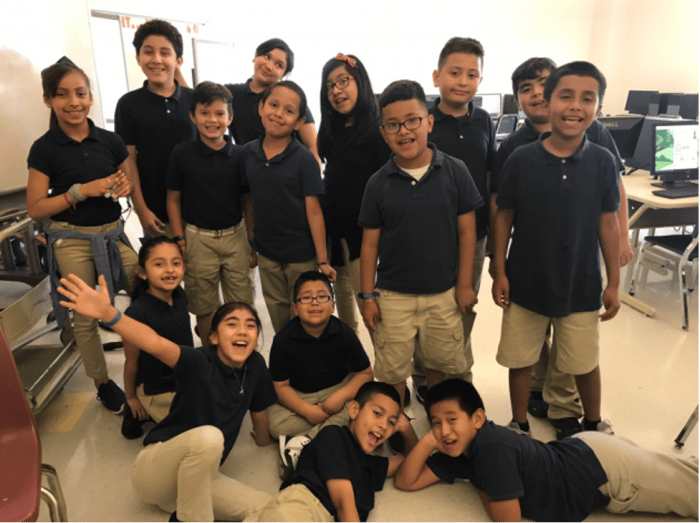 Yolanda's chess clubs competed in puzzle competitions and tournaments.
Qualitative Impact
Beyond gameplay, Yolanda observed meaningful growth in her students:
- Increased confidence among beginners
- Stronger teamwork through group activities
- Leadership development through peer mentoring
- Family engagement and community involvement
I got families involved…they wanted to stay and learn too.”
ChessKid helped create a learning environment where students could progress at their own pace while feeling supported by both peers and teachers.
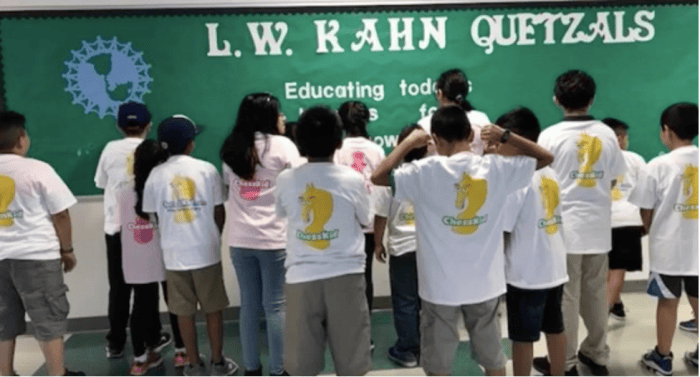 The Kahn Academy team showing off their ChessKid t-shirts.
What's Next: From Teacher to Chess Coach 🚀
After retiring from Dallas ISD, Yolanda discovered a new role beyond the classroom and started assisting at tournaments, coaching new chess players, and continuing to use ChessKid as a foundation for instruction.
I never thought chess would be such a catalyst in my life.”
Yolanda’s journey has also been highlighted beyond the classroom. She was featured on The Teevee Show Podcast, where she shared how her small afterschool club grew into a thriving chess community.
Her experience shows that ChessKid’s structured tools make it easier for classroom teachers to introduce chess in a way that feels approachable and manageable.

Yolanda shared her experience on The Teevee Show Podcast.
Key Takeaways 🔍
Yolanda's experience highlights how ChessKid supports chess programs led by teachers:
- Educators can learn chess while also teaching it
- Ready-to-use lessons reduce preparation time
- Students at different levels can learn together
- Structured online play reinforces classroom learning
- Teacher confidence grows alongside student success
Considering a Similar Program? 🤔
Yolanda’s path shows that strong chess programs don't necessarily need chess experts if there are tools that make teaching chess easier, such as those found on ChessKid.
Schools and districts exploring chess may consider:
- Starting with a small afterschool club
- Using ChessKid lessons and the Lesson Planner to guide instruction
- Encouraging peer mentoring among students
- Allowing students to practice both online and in person
- Supporting teachers with ongoing training and resources
➡️Interested in bringing ChessKid to your classroom, school, or district? Fill out our Enterprise Account Request Form and our team will follow up to help you get started.