Passed Pawn
What Is a Passed Pawn?
A passed pawn is a chess pawn that has no enemy pawns in front of it or on the adjacent files. This means nothing can stop it from moving forward toward the last rank and promoting into a new piece.
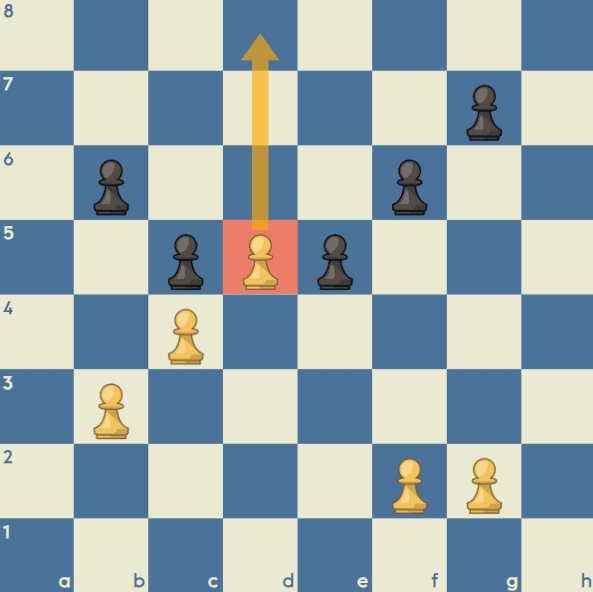
Passed pawns are one of those quiet chess ideas that can suddenly become very important. As Fun Master Mike likes to remind players, a pawn may start small, but if it keeps walking without being stopped, it can decide the game all by itself. In this article, we will learn what a passed pawn is, why it is so important, and how to use it correctly.
Here is what you will learn in this article:
- What Is a Passed Pawn?
- Why Are Passed Pawns Important?
- Types of Passed Pawns
- How to Create a Passed Pawn?
- How to Stop a Passed Pawn?
- Wrapping Up
- Passed Pawn Video
What Is a Passed Pawn?
A passed pawn is a pawn that cannot be stopped by enemy pawns. Because no opposing pawn can block it, the passed pawn becomes a long-term threat, especially as it moves closer to promotion.
Why Are Passed Pawns Important?
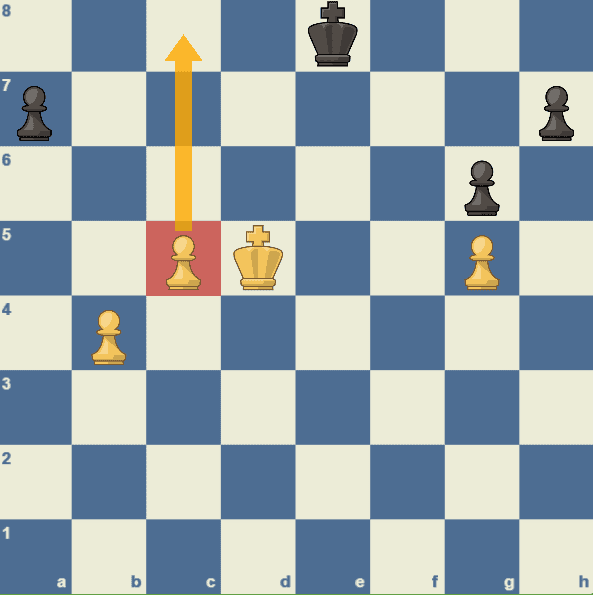
Passed pawns are powerful because they create constant pressure. Even when they are not moving, they force your opponent to think about them. If ignored, a passed pawn can reach the last rank and promote, often deciding the game.
They are especially important in the endgame, when there are fewer pieces to stop them. A single passed pawn can force the enemy king or pieces into passive positions and create winning chances elsewhere.
Types of Passed Pawns
Not all passed pawns are equally dangerous. Some are strong, and some are simply game-winning.
Protected Passed Pawn
A protected passed pawn is supported by another pawn. Because it is defended, it is very difficult to capture.
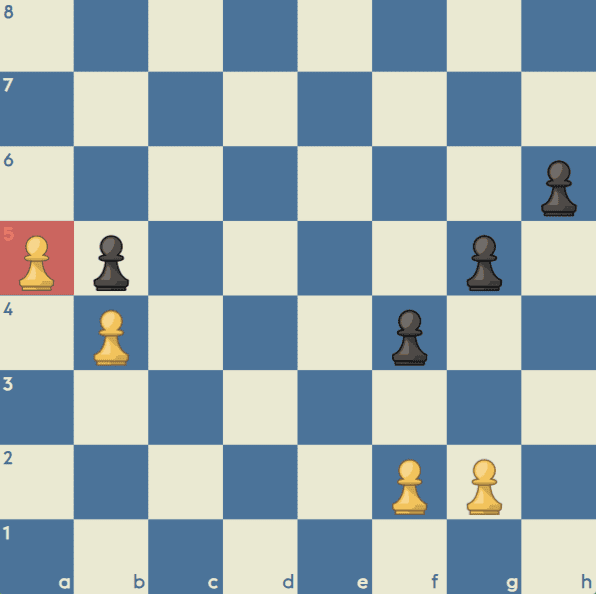
As Fun Master Mike likes to say, this pawn did not just pass. It brought a friend along for protection.
Outside Passed Pawn
An outside passed pawn is located far from the other pawns, usually on the a-file or h-file.
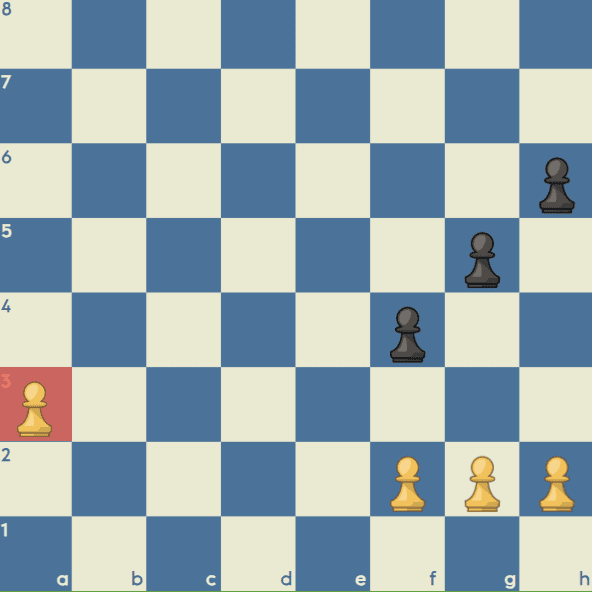
This type of pawn is powerful because it pulls the enemy king away from the center, allowing other pieces or pawns to become active elsewhere.
Connected Passed Pawns
Connected passed pawns are two or more passed pawns on neighboring files. They support each other as they advance and are very hard to stop.
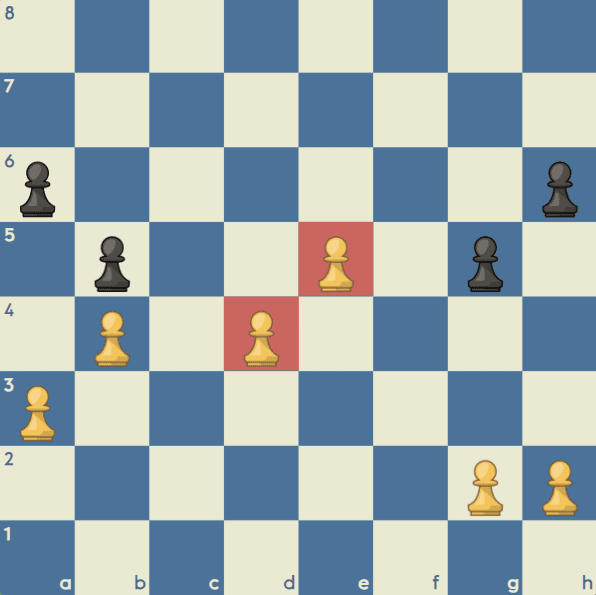
One passed pawn is a problem. Two connected passed pawns usually mean serious trouble for the defender.
How to Create a Passed Pawn?
Passed pawns are usually created through pawn exchanges and careful planning. Trading pawns on adjacent files, using pawn breaks, and simplifying into favorable endgames are common ways to create them.
In the following position, White to move and create a passed pawn to win!
White advances the pawns to force exchanges on the queenside. After the pawn trades, White creates a passed pawn that the black king cannot catch, and the pawn will promote at the end.
Understanding pawn structure is essential. Sometimes, one well-timed capture is enough to remove the last blocking pawn and suddenly create a dangerous passed pawn.
How to Stop a Passed Pawn?
Passed pawns are strong, but they are not unstoppable. Blockading the pawn, attacking it from behind with a rook, or activating the king are common defensive ideas.
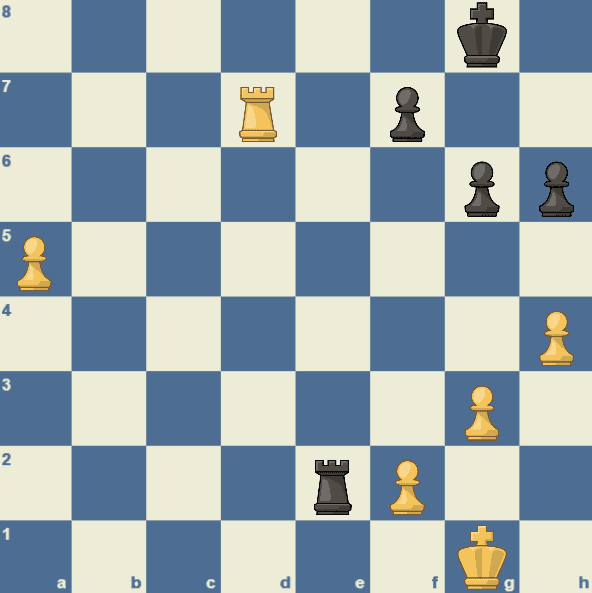
Sometimes giving up material is the only way to prevent promotion. Losing a piece is often better than allowing a pawn to become a queen.
Wrapping Up
Passed pawns may look small, but they can become the stars of the game. As Fun Master Mike likes to say, “A pawn that keeps walking without traffic in front of it is basically on a chess highway to becoming a queen!” In many endgames, the whole battle revolves around one brave pawn trying to reach the last rank while the opponent desperately tries to stop it. Sometimes that tiny pawn is stronger than a whole army of pieces.
So remember this simple idea: create passed pawns, push them forward, and make your opponent worry about them every move. Because in chess, even the smallest piece can grow up to become the most powerful one on the board.
Passed Pawn Video
Check out the short video below to learn even more about passed pawns from Fun Master Mike.